Wilkes-Barre, Princeton, São Paulo and London, 1917–1992
David Bohm
In 1952 David Bohm did what the textbooks said was impossible. He wrote down a theory in which particles always have definite positions, steered by a real guiding wave, and which reproduces every prediction of quantum mechanics.
The view
Bohm wrote a standard textbook on quantum theory in 1951, in the Copenhagen style. Discussing it with Einstein in Princeton left him dissatisfied, and within a year he had published an alternative. An idea like it had been proposed by Louis de Broglie in 1927 and abandoned under criticism; Bohm worked it out fully and showed that it answered the objections.
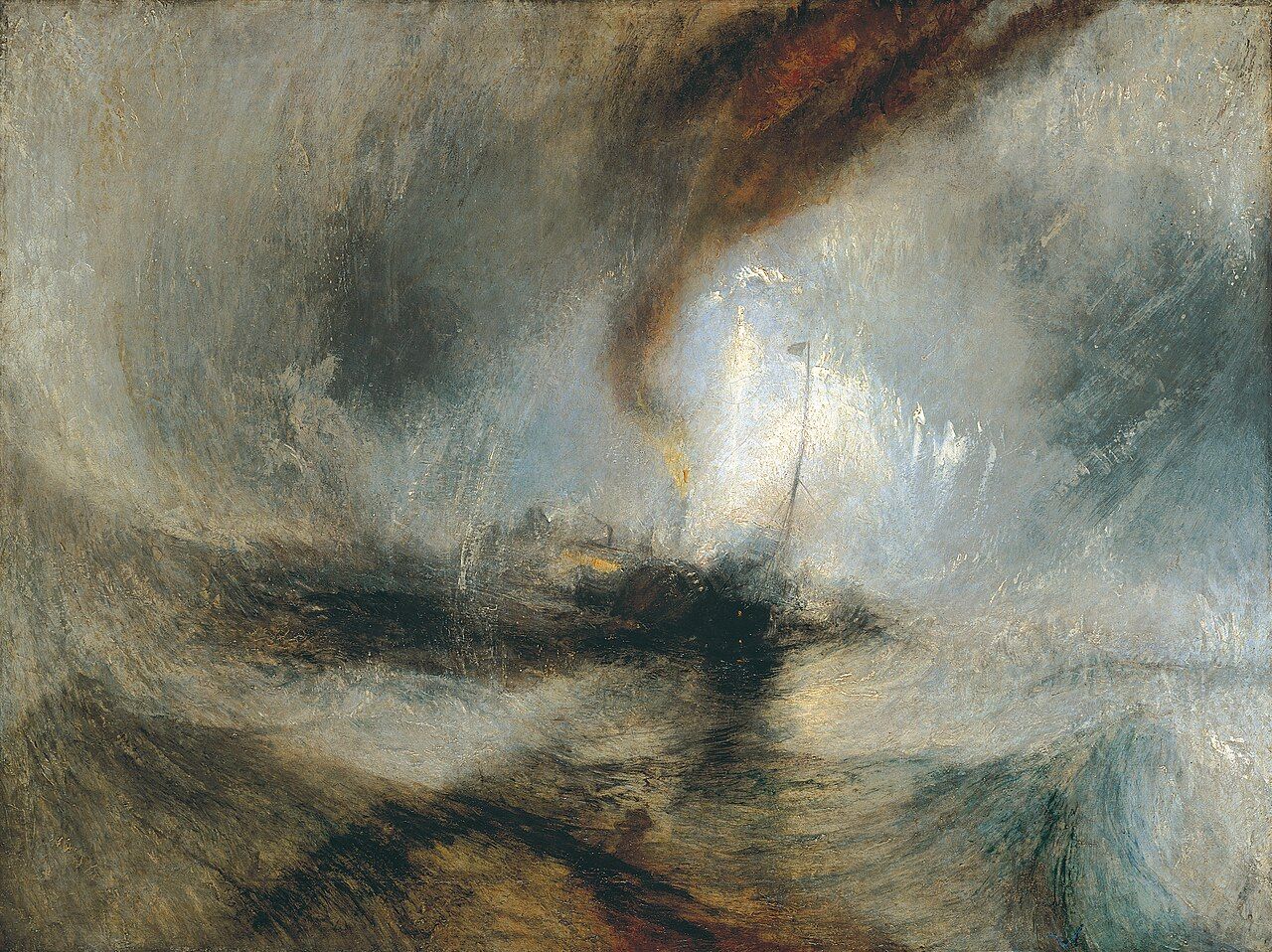
The theory has two ingredients. There is the wave function, evolving exactly as in standard quantum mechanics and never collapsing. And there are particles, each with a definite position at every moment, moving along paths determined by the wave. The wave guides the particles as a pilot guides a ship. Measurements simply reveal where the particles are.
After Bohm (1952): the electron is a particle with a precisely definable position, which varies continuously.
The argument
In the double slit, each particle goes through one slit or the other. But the wave goes through both, and the interference of the wave determines the paths, which bunch into the bright bands and avoid the dark ones. Choose the initial positions at random in the right way, and the particles land with exactly the statistics quantum mechanics predicts. There is no collapse, no observer-dependence, and no need for anything to be indefinite.
The price is non-locality. In Bohm's theory the motion of one particle can depend instantly on where a distant one is. Bohm accepted this openly, and it was Bohm's theory that led John Bell to ask whether any theory of hidden variables must be non-local. He proved that it must.
Where he meets Deutsch
Bohm was a realist when realism was unfashionable, and he showed that the Copenhagen claim that no realist theory was possible was false. Deutsch admires that. Both men also agree that the wave function is real and never collapses: on that point Bohm and Everett stand together against the textbooks.
Where they part
Deutsch's objection is short and sharp. In Bohm's theory the wave function is real and evolves exactly as in Everett's, branches and all. The particles ride along in one branch. But the other branches are still there, carrying the full structure of every other outcome, observers included. Deutsch's verdict, in a phrase he has used often, is that pilot-wave theories are "parallel-universes theories in a state of chronic denial". The extra particles add nothing that explains anything; they only mark one branch as the one that counts.
The non-locality is a second cost. Bohm's theory needs instantaneous influences and a preferred notion of simultaneity, at odds with relativity. Everett's needs neither.
| Bohm | Deutsch | |
|---|---|---|
| What is ultimately real? | Particles with definite positions, and a real wave function that guides them. | Whatever our best explanations refer to: the multiverse, and emergent and abstract things too. |
| How do we know what is real? | By physical theory, which should give an objective account of individual processes. | Conjecture and criticism. If our best explanation needs it, it exists: if it kicks back, it is real. |
| One world or many? | One world of particles, though the guiding wave carries every branch. | Many. Our universe is one layer of a multiverse, revealed by quantum interference. |
| Is reality independent of observers? | Yes. Particles have positions whether or not anyone measures them. | Yes. Observers are physical systems inside reality, governed by the same laws. |
Further reading
- David Bohm, "A suggested interpretation of the quantum theory in terms of 'hidden' variables", Physical Review (1952).
- David Bohm and Basil Hiley, The Undivided Universe (1993).
- J. S. Bell, Speakable and Unspeakable in Quantum Mechanics (1987), several essays on pilot waves.
- Bohmian Mechanics, Stanford Encyclopedia of Philosophy.