Oxford and Irvine, contemporary
Nick Bostrom and Donald Hoffman
Two modern routes back into Plato's cave. Nick Bostrom argues that we may well be living in a computer simulation. Donald Hoffman argues that evolution has hidden reality from us behind a user interface. Deutsch thinks both underrate what explanation can do.
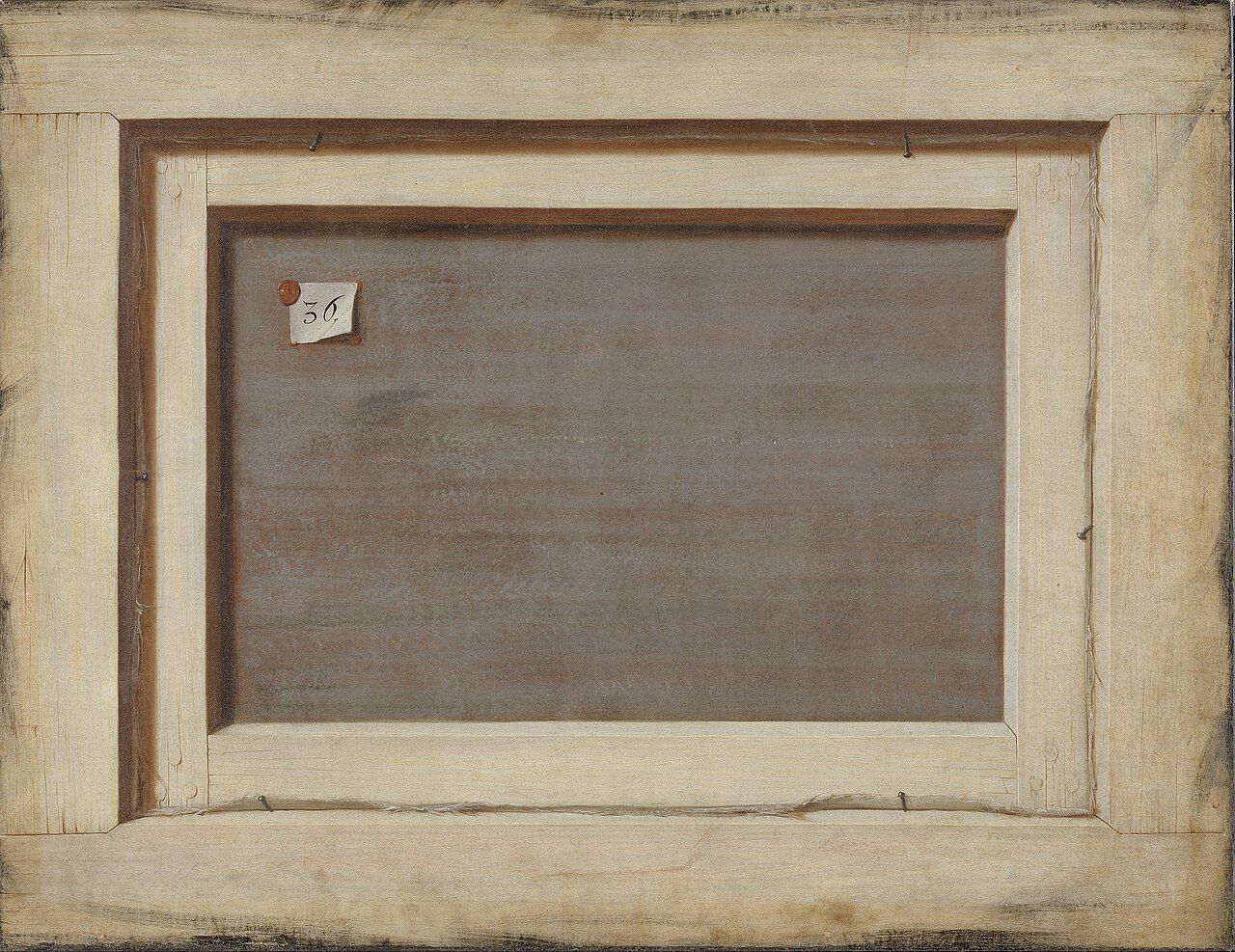
The views
Bostrom. In a paper of 2003, the Oxford philosopher Nick Bostrom argued that at least one of three things is true. Almost all civilisations like ours die out before they can run detailed simulations of minds; or almost none that could do so choose to; or we are almost certainly living in a simulation. If advanced civilisations run many simulations of their ancestors, simulated minds vastly outnumber real ones, and any given mind, yours included, is probably simulated.
Hoffman. The cognitive scientist Donald Hoffman argues that natural selection does not favour seeing the truth. In his simulations of evolutionary games, organisms tuned to fitness outcompete organisms tuned to accurate perception. So what we perceive, objects in space and time, is not reality but an interface, like the icons on a computer desktop. A file icon is blue and rectangular; the file is neither. In The Case Against Reality (2019) he proposes that what lies behind the interface is a network of conscious agents.
After Hoffman: perception is a desktop, built to hide the truth and guide useful action.
The argument
Both arguments begin from good science and end in a version of the oldest sceptical worry: that the world we know may be a show staged for us. Bostrom's uses probabilities over observers; Hoffman's uses evolution. Both conclude that our everyday picture of reality may be radically wrong in ways we could never detect.
Where they meet Deutsch
Deutsch agrees that perception is not a window on reality. Everything we experience is a rendering, built by the brain and corrected by the senses, and evolution designed the renderer for survival, not for philosophy. He also takes simulation seriously: the Turing principle says that a universal computer could render any physically possible environment, including one containing us.
Where they part
Deutsch's answer to both is the same. We do not know about reality by perceiving it. We know about it by explaining what we perceive, and explanations can reach far beyond the interface. The file icon example proves the point: computer scientists know exactly what lies under the icon, because they built explanations of it. Hoffman's argument relies on evolutionary game theory, which is itself a theory of a real world, tested by observation. If perception hid the truth completely, there could be no such theory.
Simulation is answered by the Turing principle. A simulator still obeys the laws of physics of the world it runs in, and a simulated world that kicks back is evidence of it. Our theories would be theories of a reality that includes the computer, and the laws we discover would constrain it. And Bostrom's counting of observers assumes that probability applies to the question of which mind one is, the kind of anthropic reasoning Deutsch criticises in The Beginning of Infinity for treating infinite or open-ended collections as if they could be counted.
| Bostrom and Hoffman | Deutsch | |
|---|---|---|
| What is ultimately real? | Bostrom: possibly a computer running our world. Hoffman: conscious agents, of which spacetime and objects are icons. | Whatever our best explanations refer to: the multiverse, and emergent and abstract things too. |
| How do we know what is real? | Bostrom: by probabilistic reasoning about civilisations. Hoffman: by evolutionary game theory, which says perception tracks fitness, not truth. | Conjecture and criticism. If our best explanation needs it, it exists: if it kicks back, it is real. |
| One world or many? | Qualified. Possibly many simulations; possibly one reality behind many interfaces. | Many. Our universe is one layer of a multiverse, revealed by quantum interference. |
| Is reality independent of observers? | Qualified. Something real exists, but it may be wholly unlike what we perceive. | Yes. Observers are physical systems inside reality, governed by the same laws. |
Further reading
- Nick Bostrom, "Are you living in a computer simulation?", Philosophical Quarterly (2003).
- Donald Hoffman, The Case Against Reality (2019).
- David Deutsch, The Fabric of Reality (1997), chapters 5 and 6, on virtual reality and the Turing principle.
- David Chalmers, Reality+ (2022), a sympathetic survey of simulation arguments.