Stockholm and Cambridge, Massachusetts, born 1967
Max Tegmark
Max Tegmark takes Galileo's remark that nature is written in mathematics to its limit. Reality is not described by mathematics; it is mathematics. And every consistent mathematical structure exists as a world of its own.
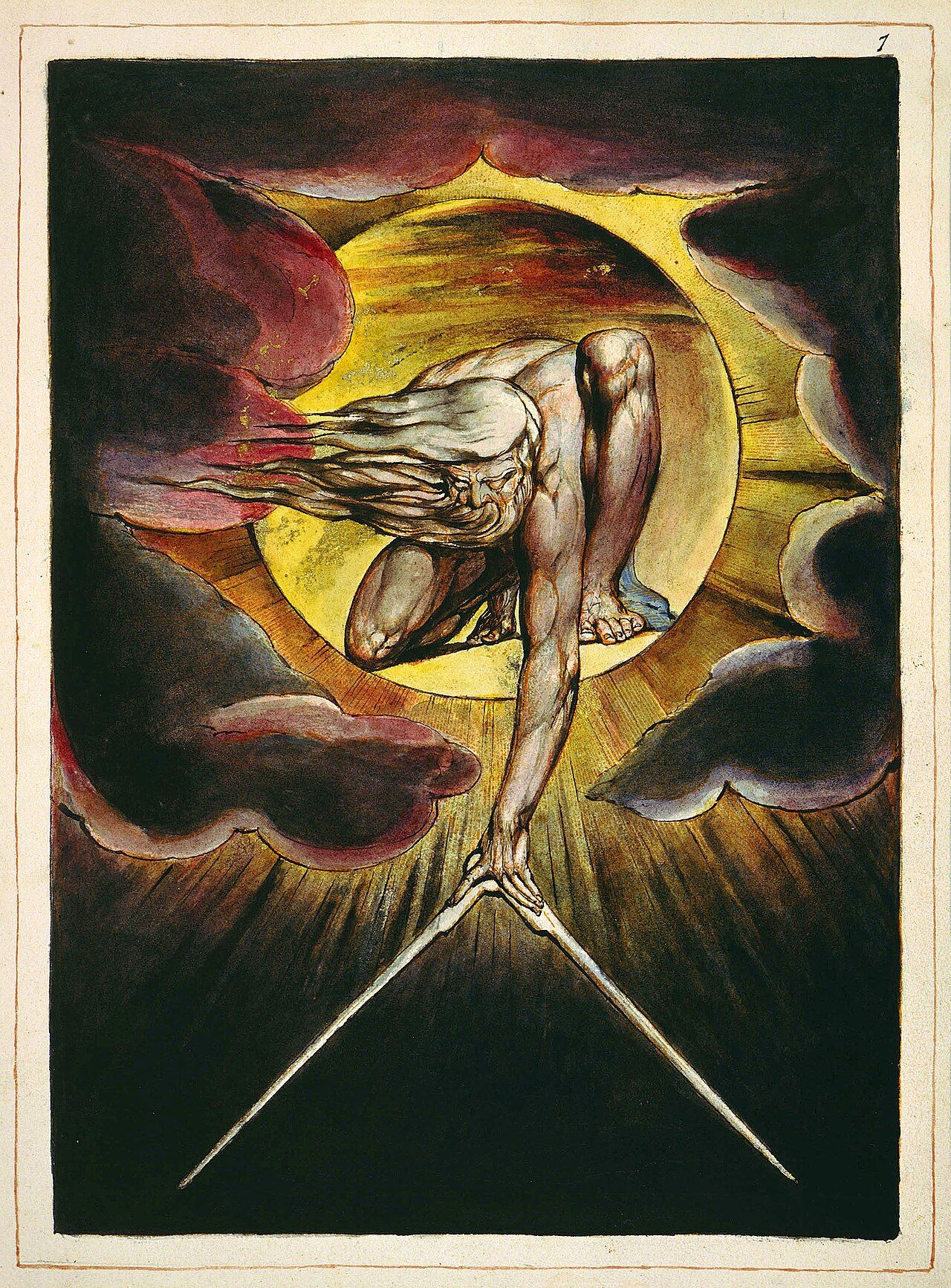
The view
Tegmark, a cosmologist at MIT, has sorted multiverses into four levels. Level I is space beyond our cosmic horizon: if space is infinite, there are regions just like ours, far away. Level II is other bubbles of an inflating universe, with different constants of nature. Level III is Everett's many worlds. Level IV contains everything else: every mathematical structure, each existing in the same sense as our universe.
The argument for level IV is his mathematical universe hypothesis. If there is an external reality independent of us, its complete description must be free of human baggage: no words like "particle" or "observer", only pure relations. A description with no baggage is a mathematical structure. And if the universe simply is that structure, there is no reason for one structure to exist and not another.
After Tegmark: our physical world is not just described by mathematics; it is a mathematical structure.
The argument
Tegmark sees this as the end of an old question. Why does mathematics describe the world so well? Because the world is mathematical. Why these laws and not others? There are no others; all of them exist, and we find ourselves in a structure complex enough to contain observers. Every alternative, he argues, leaves some fact unexplained, or appeals to a creator, or to brute luck.
Where he meets Deutsch
Tegmark is an Everettian, and his level III is Deutsch's multiverse. Both take the wave function realistically and both insist that physics is about an external reality. Both also take the close relation between mathematics and physics as a clue to be explained, not a coincidence.
Where they part
Deutsch's reason for believing in level III is that it does explanatory work: the other branches are needed to explain interference and quantum computation. Level IV does no such work. It asserts that every structure exists, but that assertion would be equally compatible with any observations whatever. On Deutsch's own criterion, a theory that could accommodate anything is easy to vary, and an easy-to-vary theory is a bad explanation.
And Deutsch reverses the direction of explanation. Mathematics does not underlie physics; physics determines which mathematical truths can be known, because proving anything requires a physical process. The world is not a structure that happens to contain mathematicians. It is a physical reality that happens to allow mathematics.
| Tegmark | Deutsch | |
|---|---|---|
| What is ultimately real? | Mathematical structures. The physical world is one of them. | Whatever our best explanations refer to: the multiverse, and emergent and abstract things too. |
| How do we know what is real? | By physics and mathematics, which discover the structure we are part of. | Conjecture and criticism. If our best explanation needs it, it exists: if it kicks back, it is real. |
| One world or many? | Many, at four levels, up to every possible mathematical structure. | Many. Our universe is one layer of a multiverse, revealed by quantum interference. |
| Is reality independent of observers? | Yes. The structure exists independently of anyone describing it. | Yes. Observers are physical systems inside reality, governed by the same laws. |
Further reading
- Max Tegmark, Our Mathematical Universe (2014).
- Max Tegmark, "The mathematical universe", Foundations of Physics (2008).
- David Deutsch, The Beginning of Infinity (2011), chapter 8, "A Window on Infinity".