Oxford and Pittsburgh, contemporary
David Wallace
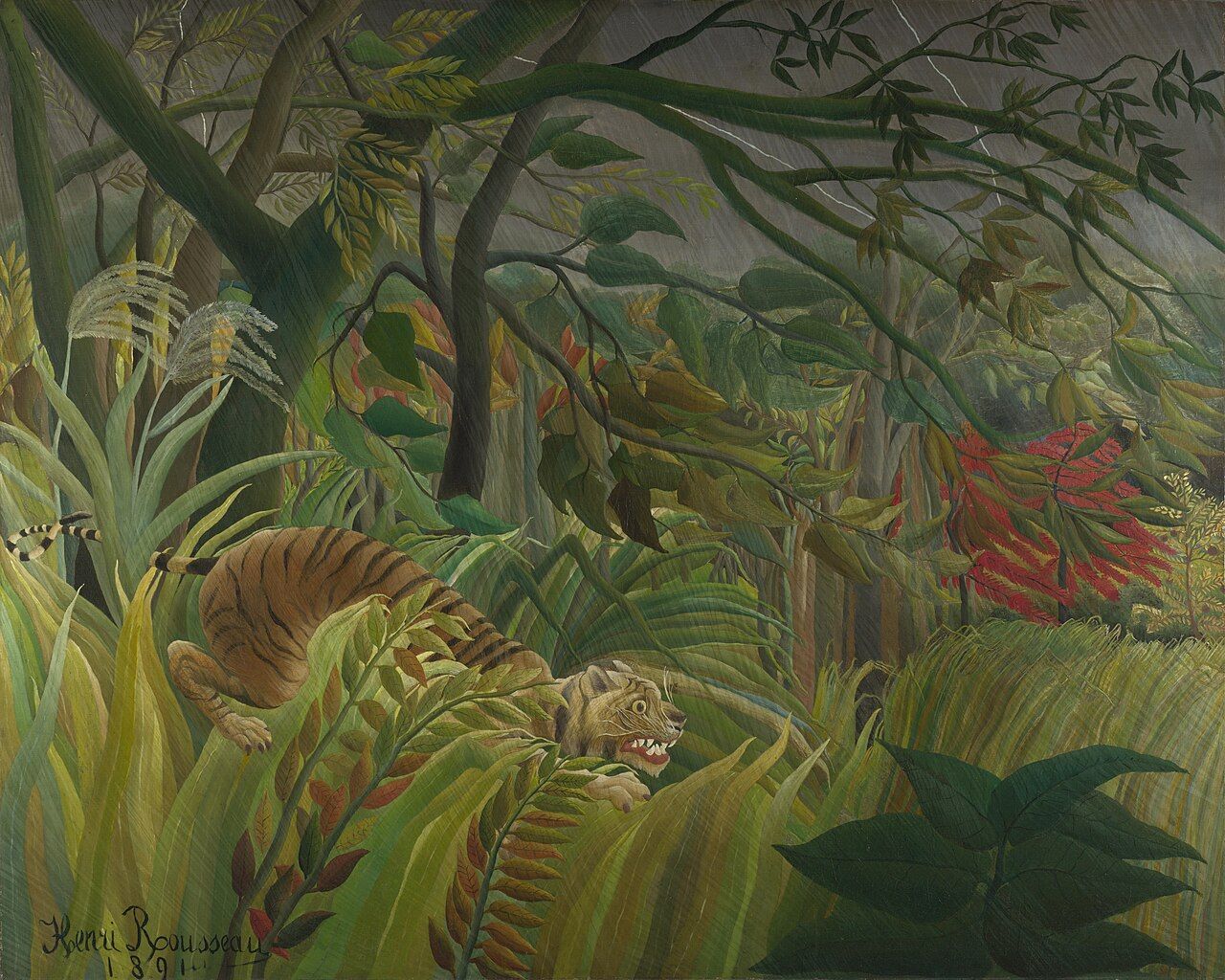
David Wallace is the philosopher who has done most to make Everett's theory rigorous. His central idea: the worlds are not added to the theory. They emerge from it, as tigers emerge from atoms, and they are just as real.
The view
Wallace's book The Emergent Multiverse (2012) is the most thorough defence of Everett's theory by a philosopher. Critics had long asked where the worlds come from. The universal wave function can be written in infinitely many ways; what picks out the particular way it divides into worlds with cats, observers and definite outcomes? Wallace's answer is that nothing picks it out by decree. Decoherence, the rapid spread of entanglement into the environment, makes certain patterns in the quantum state robust and nearly independent. Those patterns are the worlds.
This makes the worlds emergent, in the same sense as anything else above the level of fundamental physics. There is no exact, fundamental fact about how many worlds there are, just as there is no exact fact about how many grains of sand make a heap. That does not make them unreal.
After Wallace, following Dennett: a tiger is a real pattern, and a world is a real pattern too.
The argument
The key move borrows from Daniel Dennett's idea of real patterns. A tiger is real because describing the world in terms of tigers lets us predict and explain things that a description in terms of particles could not, in practice, capture. Biology studies tigers, not particle configurations. In the same way, describing the quantum state as a collection of quasi-classical worlds lets us predict and explain, and decoherence guarantees that the description works extremely well.
Wallace also developed the decision-theoretic account of probability that Deutsch began in 1999. A rational agent who knows the world will branch, he argues, must weight the branches by the squared amplitudes of quantum theory, the Born rule, on pain of incoherence.
Where he meets Deutsch
Almost entirely. Wallace and Deutsch are allies, and Wallace has been the theory's main philosophical champion since the early 2000s. Both reject collapse; both take the worlds as real; both defend the decision-theoretic account of probability. Wallace's emergentism is very close to Deutsch's view, set out in The Fabric of Reality, that high-level things such as statues are as real as atoms.
Where they differ in emphasis
Wallace tends to present the worlds as emergent and approximate, with no deep fact about how many there are. Deutsch's language of fungible instances aims at something more exact: the multiverse has a definite structure of histories, measure and all, even where they are not yet different. And Deutsch puts more weight on explanation than on the success of description: the branches are real because nothing else can explain interference and quantum computation.
| Wallace | Deutsch | |
|---|---|---|
| What is ultimately real? | The quantum state, and the emergent structures within it, worlds included. | Whatever our best explanations refer to: the multiverse, and emergent and abstract things too. |
| How do we know what is real? | By our best physics, read literally, with emergent levels as real as fundamental ones. | Conjecture and criticism. If our best explanation needs it, it exists: if it kicks back, it is real. |
| One world or many? | Many: emergent, approximately independent worlds, picked out by decoherence. | Many. Our universe is one layer of a multiverse, revealed by quantum interference. |
| Is reality independent of observers? | Yes. The quantum state and its structures exist independently of observers. | Yes. Observers are physical systems inside reality, governed by the same laws. |
Further reading
- David Wallace, The Emergent Multiverse: Quantum Theory according to the Everett Interpretation (2012).
- Simon Saunders, Jonathan Barrett, Adrian Kent and David Wallace (eds), Many Worlds? Everett, Quantum Theory, and Reality (2010), the case for and against.
- Daniel Dennett, "Real patterns", Journal of Philosophy (1991).