Moravia, Prague and Vienna, 1838–1916
Ernst Mach
Ernst Mach was a brilliant experimental physicist who thought physics should never say more than experience warrants. For him the world was made of sensations, and atoms were a convenient fiction until somebody saw one.
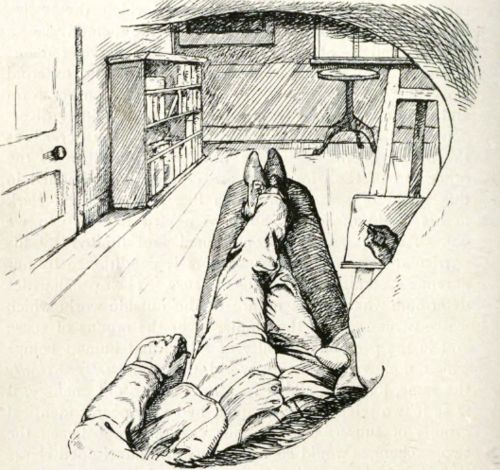
The view
Mach's name survives in the Mach number and in the shock-wave photographs he took of bullets in flight. His philosophy was as rigorous as his experiments. In The Analysis of Sensations (1886) he argued that the world is composed of elements, colours, sounds, pressures, spaces and times, which are neither mental nor physical in themselves. Grouped one way they make up bodies; grouped another, they make up the self. The self, he said, cannot be saved.
Science, on this view, does not discover what lies behind experience. It summarises experience as economically as possible. A law of nature is a compressed table of observations, like a formula that saves you from memorising every value in a list.
The aim of science, after Mach: to describe the facts of experience with the least expenditure of thought.
The argument
Mach's targets were concepts that went beyond any possible experience. Newton's absolute space, he argued, had no observable consequences that could not be explained by the motion of the distant stars. Einstein called this criticism one of the inspirations for relativity. Atoms were a more famous target. No one had seen one, and Mach held that the atomic hypothesis was at best a mathematical device. Asked about atoms, he is said to have replied with a question: have you seen one?
The answer came from the jiggling of pollen grains. In 1905 Einstein showed that the random motion of small particles in water, which the botanist Robert Brown had observed in 1827, would follow precise statistical laws if it were caused by molecules striking them. Jean Perrin's measurements confirmed the predictions, and by 1910 almost every physicist accepted that atoms were real. Mach, by most accounts, never did.
Where he meets Deutsch
Mach insisted that theories answer to experiment, and that concepts with no testable consequences should be treated with suspicion. Deutsch agrees that experiment is the arbiter between rival theories. Mach's critique of absolute space was also good physics: a criticism that helped lead to a better explanation.
Where they part
Mach is Deutsch's chief example of what he calls bad philosophy: philosophy that does not merely fail to help knowledge grow, but actively prevents it. Positivism said that only what is observed is real, and so it ruled out the explanations that science exists to find. If Mach's view had prevailed, atoms would have remained a fiction, and the explanation of Brownian motion would have been forbidden.
Deutsch's criterion turns Mach upside down. The atoms were real because they kicked back: they explained the motion of the grain, and the explanation made predictions that could have failed. Mach's influence lived on in the Vienna Circle and, through Bohr and Heisenberg, in the instrumentalism that settled over quantum mechanics.
| Mach | Deutsch | |
|---|---|---|
| What is ultimately real? | Elements: colours, sounds, pressures, spaces and times, neither mental nor physical. | Whatever our best explanations refer to: the multiverse, and emergent and abstract things too. |
| How do we know what is real? | By observation alone. Theories are economical summaries of what has been observed. | Conjecture and criticism. If our best explanation needs it, it exists: if it kicks back, it is real. |
| One world or many? | One world of experience. Talk of anything beyond it is metaphysics. | Many. Our universe is one layer of a multiverse, revealed by quantum interference. |
| Is reality independent of observers? | No. The world is a complex of sensations; there is nothing behind them. | Yes. Observers are physical systems inside reality, governed by the same laws. |
Further reading
- Ernst Mach, The Analysis of Sensations (1886; English translation 1897).
- Ernst Mach, The Science of Mechanics (1883), with the critique of absolute space.
- David Deutsch, The Beginning of Infinity (2011), chapter 12, "A Physicist's History of Bad Philosophy".
- Ernst Mach, Stanford Encyclopedia of Philosophy.